
Enterprise, Dignity and the Institutions We Build
One of the often-overlooked aspects of Torchgrab Africa’s ministry alongside Petra School on the Rock is what might be called the enterprise side of our work.
Petra School is not a conventional profit-seeking company, nor is Torchgrab Africa. We are, in every legal and practical sense, a nonprofit Christian ministry. Yet the word enterprise helps explain a very important dimension of what we do: the work of building, organizing and sustaining something that serves others.
While often connected with the for-profit business world, at its root, enterprise is an undertaking: the bringing together of people, labor, capital, skill, leadership, resources and risk in order to build something that did not exist before. In that sense, Petra School is very much an enterprise.
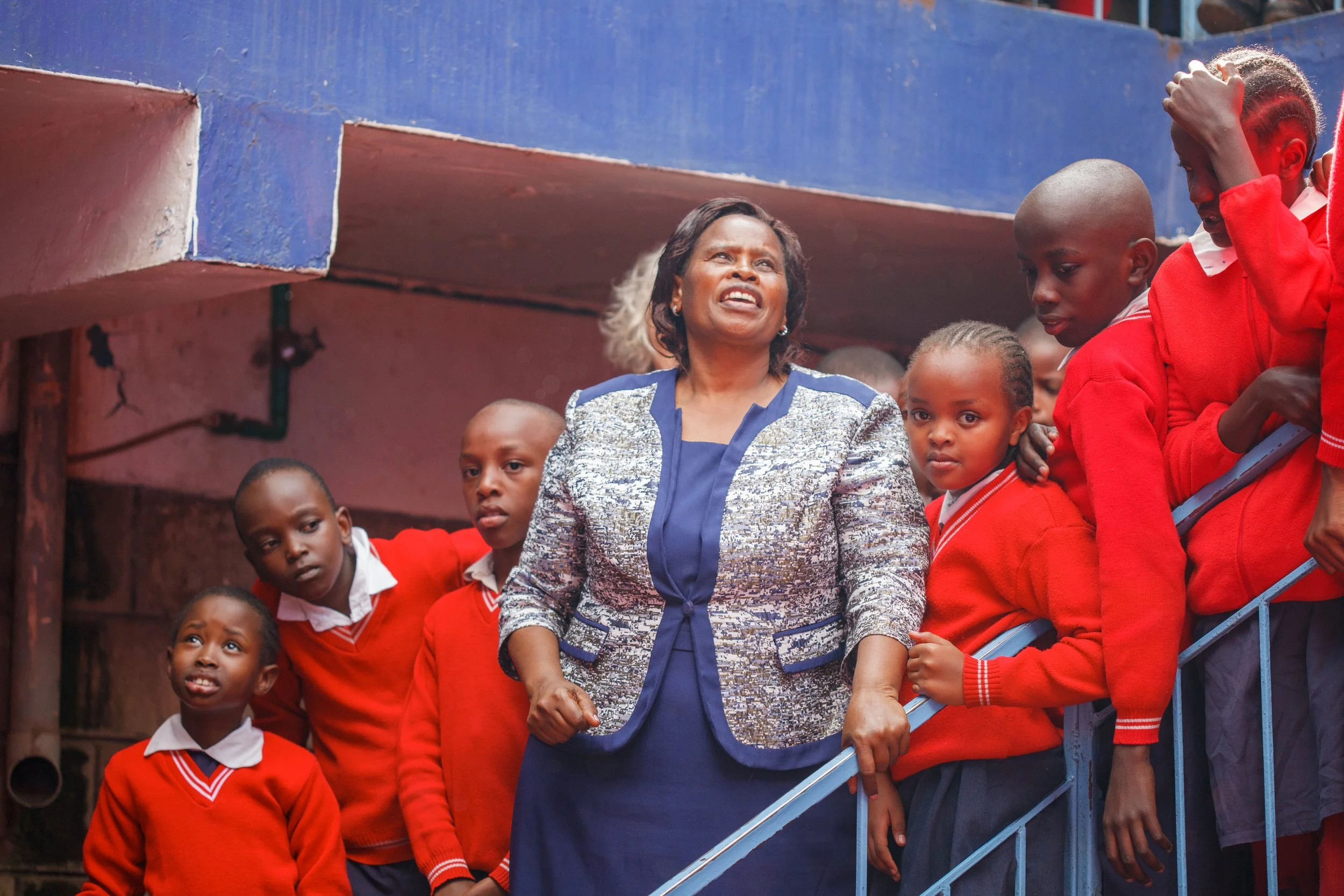
Petra School on the Rock Founder, Hellen Nguthiru, surrounded by students during a school assembly in Nairobi, Kenya.
We speak often in Christian ministry about transforming lives, transforming communities and even transforming nations for Christ. Those are worthy ambitions, but nations are not transformed by sentiment alone. They are built through families, churches, schools, businesses and civic institutions, by men and women who accept responsibility, who teach, employ, save, invest, lead and serve.
Former British Prime Minister, Margaret Thatcher, understood this well. Speaking in 1991 about societies rebuilding their civic and economic institutions, she said, “There is no more public spirited act than to build up a successful business and so provide good jobs.” Her broader argument was that a healthy political, cultural and civic life requires material foundations. Prosperity cannot simply be distributed; it must first be created. Jobs must exist before they can provide livelihoods. Skills must be developed before they can be put to use. People must be given the opportunity not merely to receive, but to contribute.
In 2024, roughly 90 percent of newly created Kenyan jobs were in the informal economy, and the World Bank has repeatedly noted the insecurity that can accompany informal employment like unpredictable income, fewer protections and limited long-term certainty. That makes the jobs created at Petra all the more meaningful. Petra provides steady employment for people in a community where that kind of stability is far from guaranteed.
That may sound less dramatic than feeding a hungry child or paying a school fee, but its consequences can be every bit as profound. A good job can change more than one life. It can help sustain a household, pay school fees, put food on the table and give a parent greater confidence about tomorrow. Over time, that stability strengthens not only individual families, but the community around them.
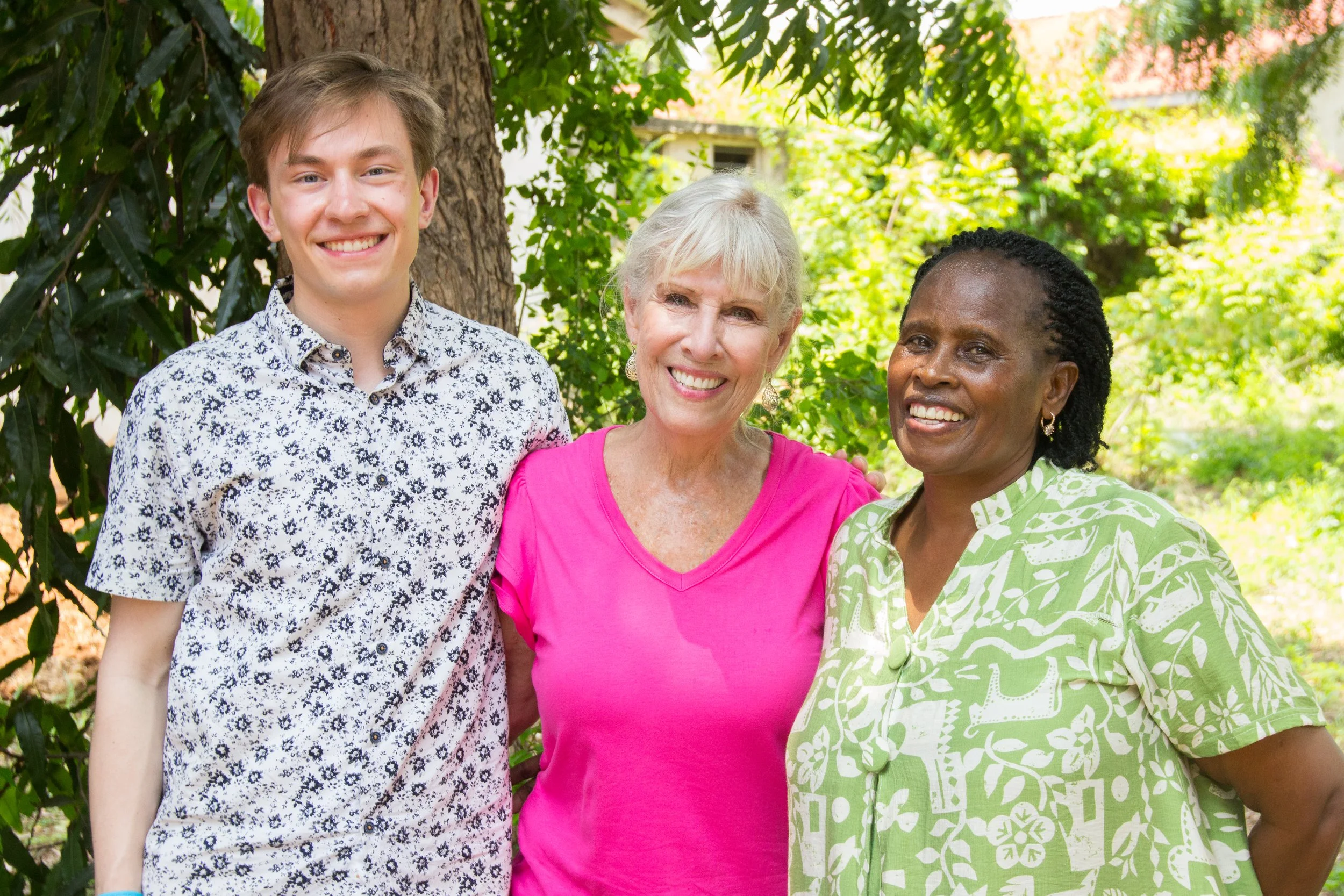
From left: Jackson Nelson; Claudia Porter, founder of Torchgrab Africa; and Hellen Nguthiru, founder of Petra School on the Rock.
There is a tendency in Christian writing about poverty to speak extensively about giving and surprisingly little about creating. Scripture does both. Genesis itself begins with work. In Genesis 2:15, Adam is placed in the garden “to work it and take care of it.”
Proverbs 31 is remarkable when read through this same lens. The woman described there is not economically passive. She recognizes that her work is profitable. She provides for her household, and she opens her hand to the poor. Production and generosity are not placed in opposition to one another. In fact, one often makes the other possible.
John Wesley developed much the same logic in his sermon The Use of Money: “Gain all you can; save all you can; give all you can.” Wesley was equally clear that gain must never come at the expense of health, conscience or neighbor. Wealth was never the final purpose. Responsibility and a stewardship is.

One of the most beautiful examples of this at Petra is Lucy, a longtime teacher who now oversees much of the younger grades at Petra in Nairobi. Lucy began teaching at Petra in 2009. She is the mother of five children, four of whom have attended Petra, and her oldest son went on to college.
Petra gave Lucy somewhere to exercise her vocation, and through her work she helped educate hundreds of children. Her employment helped support her own family. Her children benefited from the school in which she served. Her experience accumulated over many years, and as she grew in knowledge and responsibility, she became part of the human infrastructure that allowed Petra itself to grow. That is one of the things I find most compelling about enterprise. It’s not simply a transaction in which one person gives and another receives, but a relationship of mutual responsibility and mutual advancement.
Multiply that story across an institution and the significance becomes SO much clearer. Today, Petra employs dozens of people. Behind those employees are children, spouses, parents and extended families impacted daily.
At Torchgrab Africa, we sometimes call that compACTION - compassion transformed into action. This “business,” the business of ministry, opens doors to education, employs men and women, strengthens families, develops leaders, and most important of all, brings people to Jesus. That is why we care about building institutions that last. We’re not interested only in meeting today’s need. We want to build something strong enough to keep serving, keep growing and keep carrying the Gospel into the next generation. Lives changed through Christ become families changed through Christ, churches strengthened, leaders raised up and communities transformed.
That is enterprise. But in this case, enterprise and ministry are not separate things. One is simply another way of carrying out the other.
